Material Characterization
The desirability of consumer goods is often linked to their "feel" - haptic qualities such as texture, warmth, softness, etc. Tribology provides tools for certain physical measurements such as coefficient of friction and indentation hardness, but these may not relate to the interactions that occur between these products and human fingertips and the perception of human brains. Professional "hands" are often hired to guide product development and maintain quality as manufacturing methods and suppliers evolve but they are expensive and subjective.
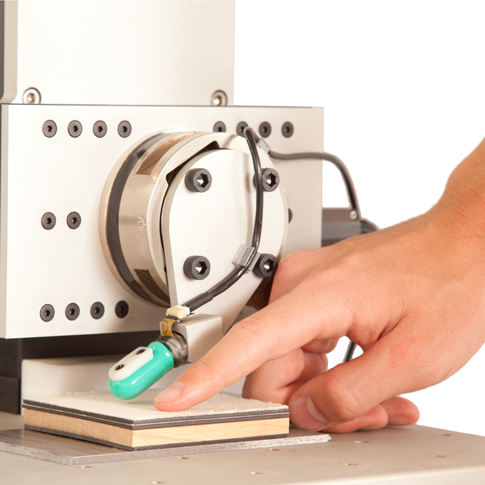
The BioTac mimics the physical properties and sensory capabilities of the human finger tip. It provides the same interactions and information as a human finger but as completely objective data instead of just opinions. When combined with our instrumentation to generate precise stroking movements (photo) and our Bayesian Exploration algorithm to select those movements and interpret the sensory data, we have achieved unprecedented speed and accuracy in classifying and identifying complex textures (Fishel & Loeb, 2012). SynTouch now provides consultation, test services and instrumentation for leading manufacturers of textile and paper goods, skin and hair care products, consumer electronics, etc.